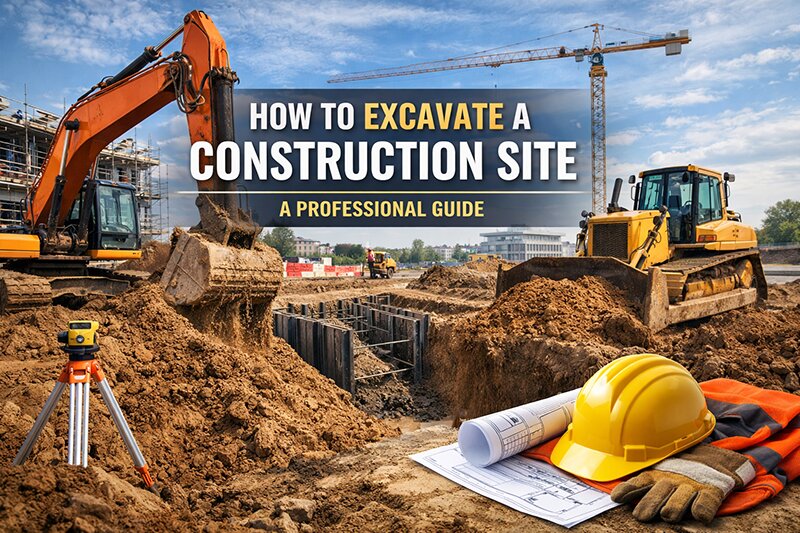
Excavation is a critical phase in any construction project, forming the foundation for structural stability, safety, and long-term durability. Proper planning, execution, and compliance with engineering standards are essential to ensure efficient and safe excavation operations. This guide outlines the key steps, methods, and best practices involved in excavating a construction site.
1. Site Assessment and Planning
- Topographical Survey: Analyze land contours, elevations, and natural features.
- Soil Investigation: Conduct geotechnical testing to determine soil type, bearing capacity, and groundwater conditions.
- Utility Identification: Locate underground utilities such as water pipes, gas lines, and electrical cables.
- Permits and Regulations: Obtain necessary permits and ensure compliance with local building codes and environmental requirements.
A comprehensive excavation plan should define depth, slope angles, equipment, and safety measures.
2. Setting Out and Site Preparation
- Marking Boundaries: Use stakes, strings, or GPS systems to define excavation limits.
- Clearing the Site: Remove vegetation, debris, and obstructions.
- Access Routes: Establish safe entry and exit paths for machinery and workers.
- Erosion Control: Install drainage systems or silt fences to prevent erosion.
3. Selection of Excavation Methods
- Open Excavation: Suitable for large, shallow areas such as building foundations.
- Trench Excavation: Used for pipelines, cables, and drainage systems.
- Cut and Fill: Balances soil removal and reuse for grading purposes.
- Rock Excavation: Involves mechanical breaking or controlled blasting.
4. Equipment and Machinery
- Excavators: Primary machines for digging and material handling.
- Bulldozers: Used for clearing land and pushing soil.
- Backhoes: Ideal for smaller, precise excavation tasks.
- Dump Trucks: Transport excavated materials.
- Compactors: Ensure soil stability during backfilling.
5. Excavation Process
- Topsoil Removal: Strip and store topsoil for later use.
- Bulk Excavation: Remove large volumes of soil to reach approximate depth.
- Detailed Excavation: Adjust to exact dimensions per engineering drawings.
- Shoring and Sloping: Stabilize excavation walls to prevent collapse.
- Dewatering: Use pumps or drainage systems to manage groundwater if needed.
6. Safety Considerations
- Protective Systems: Use trench boxes, shoring, or benching.
- Worker Training: Ensure personnel are trained in safety procedures.
- Hazard Monitoring: Watch for cave-ins, equipment hazards, and gas exposure.
- Safe Access: Provide ladders or ramps for entry and exit.
- Inspections: Conduct daily site inspections, especially after weather changes.
7. Environmental and Sustainability Practices
- Soil Reuse: Reuse excavated materials where possible.
- Dust Control: Use water spraying to reduce airborne dust.
- Noise Management: Limit noise impact on surrounding areas.
- Waste Handling: Dispose of contaminated materials properly.
8. Backfilling and Site Restoration
- Backfilling: Replace soil in layers and compact thoroughly.
- Grading: Level the site according to design specifications.
- Landscaping: Restore topsoil and vegetation.
Conclusion
Excavating a construction site requires detailed planning, proper equipment, and strict adherence to safety and environmental standards. By following best practices from initial assessment to final restoration, construction teams can ensure efficient execution, reduce risks, and establish a solid foundation for any project.